
Reverse Osmosis Systems
Reverse osmosis (RO) forces water through a semi-permeable membrane at multiple stages, removing dissolved solids, chlorine, fluoride, heavy metals and limescale-causing minerals. The result is some of the purest drinking water available from an under-sink system. All our RO units fit discreetly under the kitchen sink and include everything needed for installation.
Torn between the three? Compare the RO-300, RO-400 and RO-500 side by side on output, footprint, waste water and running costs.
 Reverse Osmosis
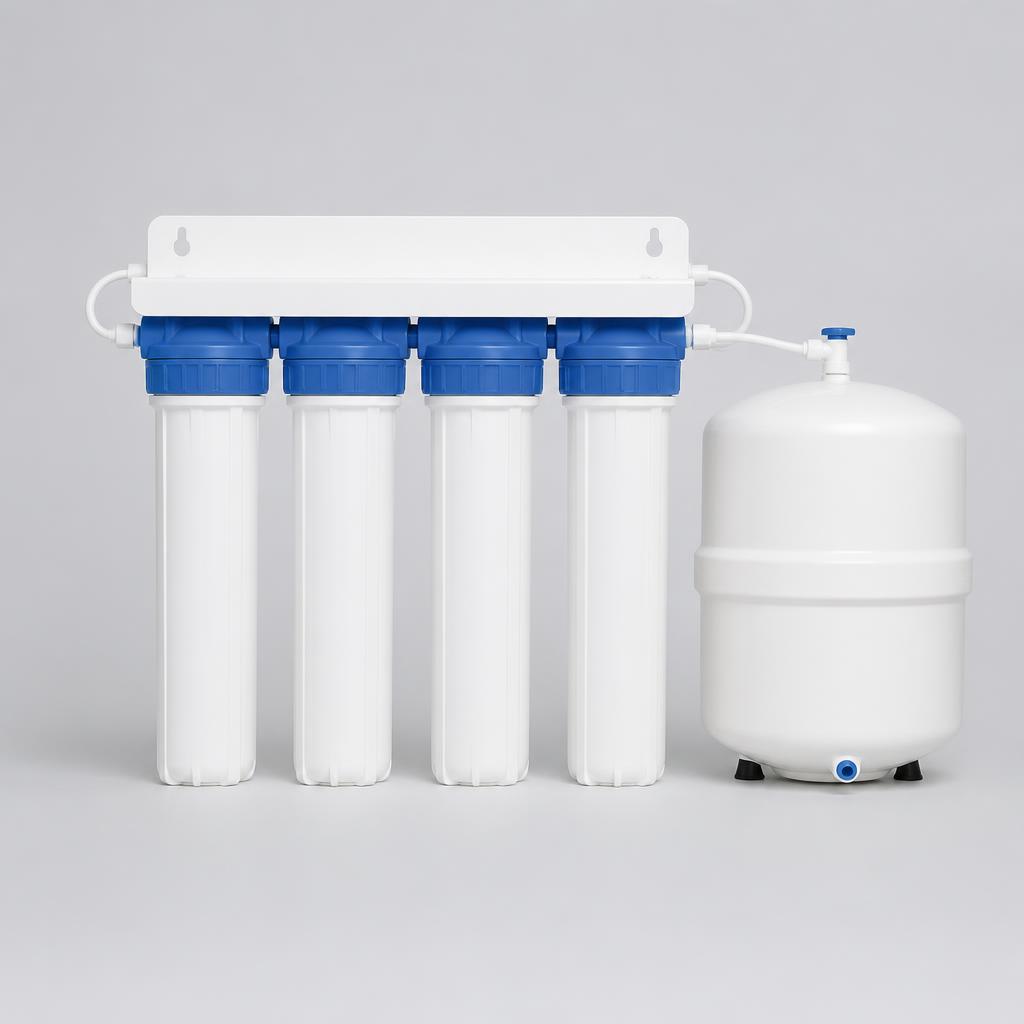
Clarisink RO-400 Reverse Osmosis System
£229.00
VAT included
 Reverse Osmosis
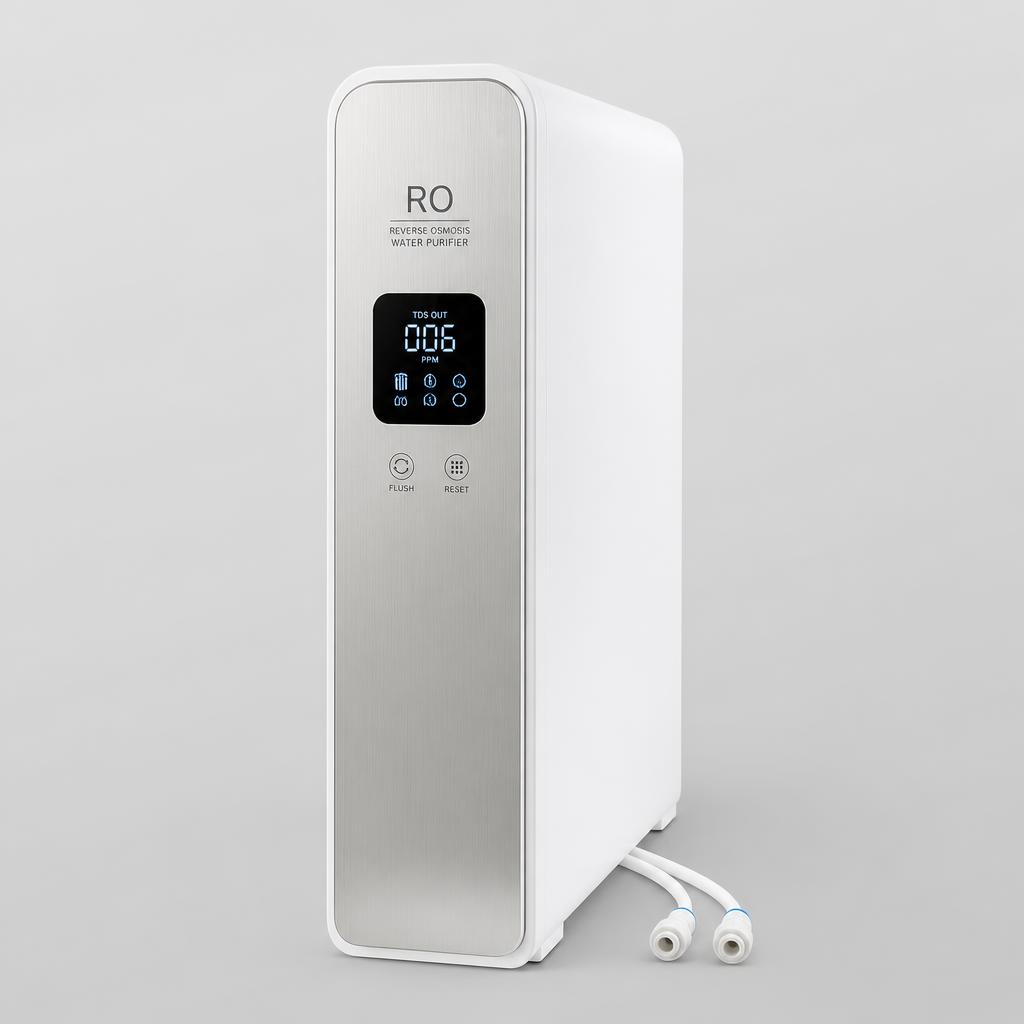
Clarisink RO-500 Tankless Reverse Osmosis System
£289.00
VAT included
 Reverse Osmosis
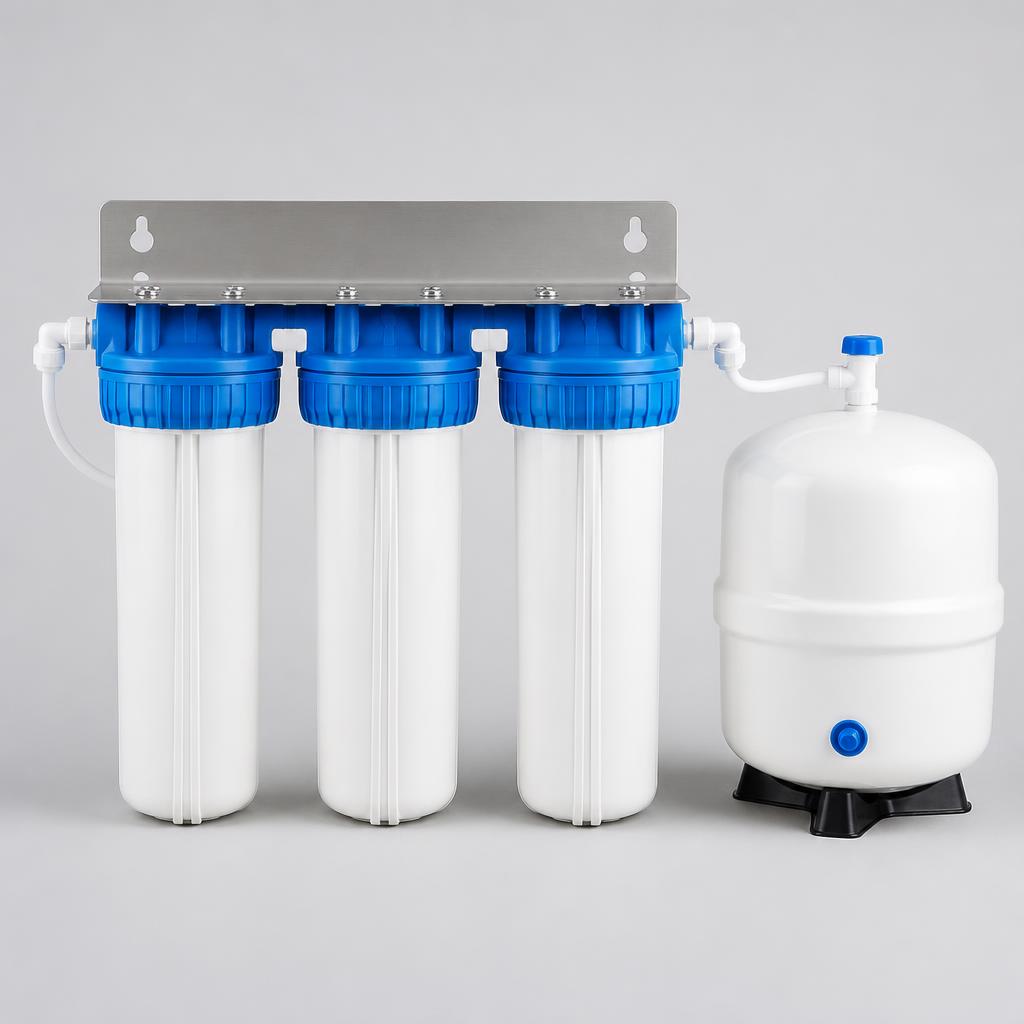
Clarisink RO-300 Compact Reverse Osmosis System
£189.00
VAT included
Is reverse osmosis right for your kitchen?
RO is the most thorough option for hard-water regions: the membrane rejects dissolved solids that carbon filtration passes straight through, including much of the calcium and magnesium behind limescale. The trade-off is a larger under-sink footprint, a slower fill rate and a small amount of waste water.
If your main complaint is chlorine taste rather than scale, a carbon system is cheaper to buy and to run. Our RO vs carbon comparison sets out both, and the hard water area map shows which applies where you live.
How a multi-stage RO system is put together
Reverse osmosis is not one filter but a sequence. Water first passes a sediment stage that catches rust, grit and pipe debris, then one or two carbon stages that strip chlorine — a necessary step, because chlorine attacks the membrane material itself. Only then does the water reach the semi-permeable membrane, where mains pressure pushes it through pores fine enough to reject dissolved solids while the concentrated remainder is carried away to the waste trap. A final post-filter polishes taste and, on our systems, returns a small amount of calcium and magnesium so the water does not taste flat.
Understanding that sequence explains the maintenance schedule. The early stages are sacrificial and cheap; the membrane is the expensive component and lasts two to three years precisely because the stages in front of it are replaced every six to twelve months. Households in chalk-fed regions such as London, Kent and Cambridgeshire benefit from adding a scale-reduction pre-stage, which slows membrane fouling and brings the running cost per litre down over the life of the unit.
Cabinet space, pressure and drainage
Before ordering, measure the usable width and height inside the sink cabinet with the waste trap in place. A tanked RO-300 or RO-400 needs room for the filter manifold plus a pressure vessel roughly the size of a football, which many people site in the adjacent cupboard. The tankless RO-500 is a single slim box but requires a power socket within reach. All three need a 35mm hole for the filtered tap, an isolating valve on the cold feed, and a saddle connection into the waste pipe for the reject line.
Mains pressure matters too. Tanked systems rely on incoming pressure to drive the membrane, so a gravity-fed supply or a very low static pressure will produce disappointing output; a pumped tankless unit solves that. If you are unsure what pressure your kitchen runs at, your water company publishes a minimum guaranteed figure for your postcode, and we are happy to advise before you commit.
Frequently asked questions
- What does reverse osmosis actually remove from UK tap water?
- An RO membrane filters at around 0.0001 microns, which is fine enough to reject the large majority of dissolved solids: lead and copper picked up from old pipework, nitrates from agricultural run-off, fluoride, chlorine by-products, microplastics and the calcium and magnesium responsible for limescale. UK mains water is already microbiologically safe, so RO is about taste, hardness and dissolved contaminants rather than safety.
- Which system should I buy — RO-300, RO-400 or RO-500?
- The RO-300 is the compact tanked option for smaller cabinets and lighter use. The RO-400 raises output and suits a family of four. The RO-500 is tankless, delivers the fastest flow and the lowest waste ratio, but needs a power socket under the sink. Our side-by-side comparison sets out output, footprint, waste ratio and power for all three.
- Do reverse osmosis systems waste a lot of water?
- Older RO units ran at around 3 litres rejected per litre produced. The tankless RO-500 runs closer to 1:1, and the tanked RO-300 and RO-400 sit between the two. The reject water is simply concentrated mains water and drains away through the existing waste trap.
- Does RO water need remineralising?
- It is a matter of taste rather than health, since a normal UK diet supplies far more calcium and magnesium than drinking water does. Some people find fully de-mineralised water flat, which is why our systems include a post-filter remineralising stage to put a small amount of calcium and magnesium back before the tap.
- Will an RO system fit under a standard UK sink?
- Yes in most kitchens. A tanked system needs room for both the manifold and a pressure vessel roughly the size of a football; a tankless unit is a single slim box. You also need a 35mm hole for the filtered tap, an isolating valve on the cold feed and a waste connection, all of which are included in the fitting kit.
- How much maintenance does reverse osmosis need?
- Pre-filters every 6 to 12 months and the membrane every 2 to 3 years, both quick-change cartridges that twist out without tools on our systems. Hard water in the South East shortens pre-filter life, so fitting a scale-reduction pre-stage protects the membrane and lowers running costs.